


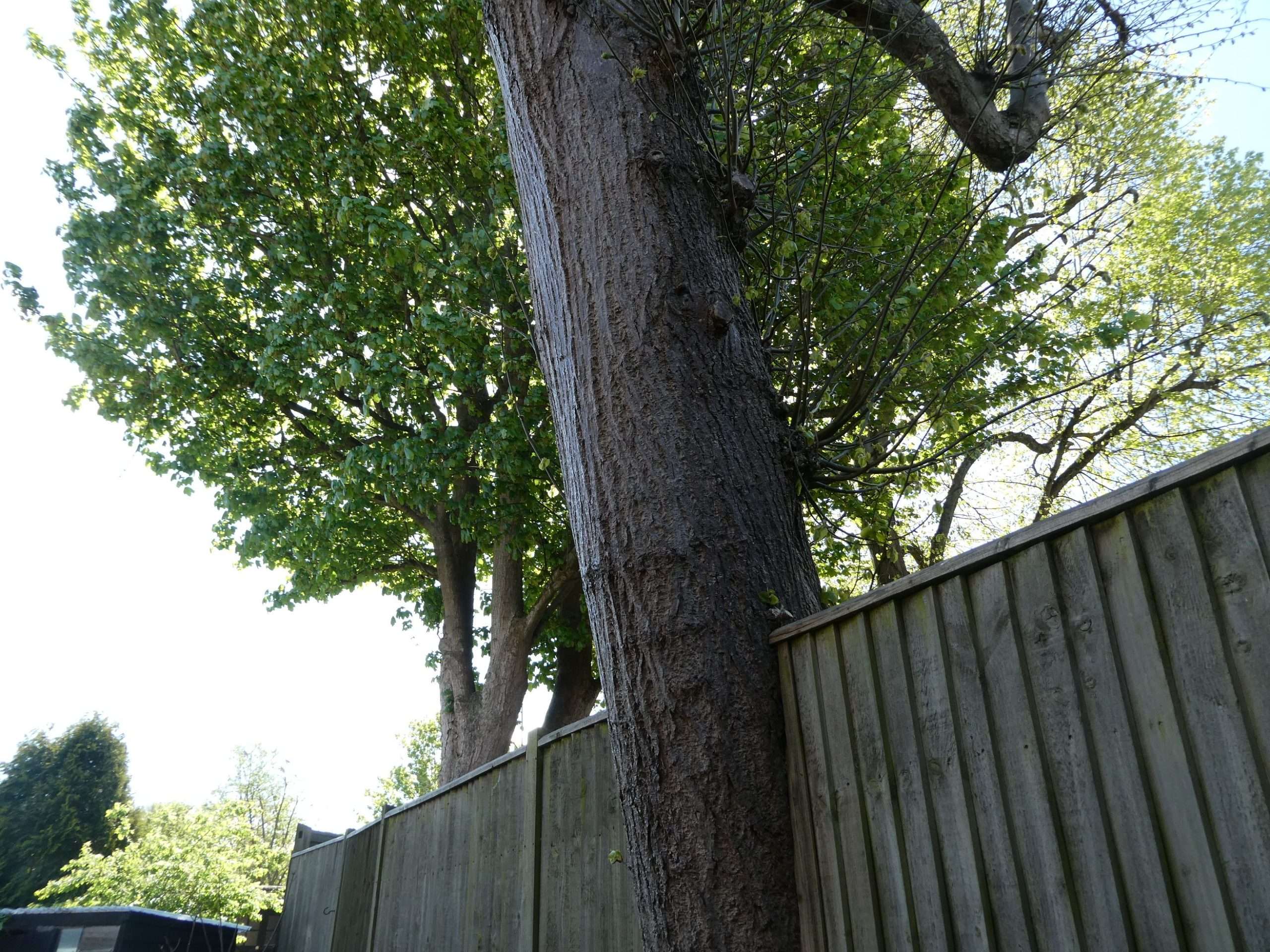
A mature tree can be one of a property’s greatest assets. It may provide shade, privacy, wildlife habitat and character; qualities that can make a home and garden especially appealing. However, trees also need to be carefully considered before a property purchase. Their position, species, size, condition and relationship with the property structure and surrounding land can affect maintenance, insurance policies, neighbour relations and plans for a future extension.
A nearby tree is not automatically a problem. Most trees coexist with buildings without significant impact. The important point is to recognise when their presence may need to be considered and investigation before you commit to a purchase.
A RICS Home Survey is an important starting point. It provides an independent visual assessment of the property’s condition and can identify visible signs or circumstances that warrant further advice. It is not, however, a substitute for an arboricultural inspection, soil investigation, structural assessment or legal advice.
Why trees matter when buying a property
Trees can affect a property in several ways. Their branches may overhang roofs, gutters, outbuildings, paths or neighbouring land. Their roots may cause damages to drainage runs, paving, retaining walls and foundations. Leaf fall, moss growth and shade can contribute to blocked gutters, damp external surfaces or slippery paths, while large trees close to a building may raise concerns about structural movement depending on the soil and construction.
The potential effect is influenced by a combination of factors:
- the tree species, height, condition and likely mature size;
- its distance and orientation relative to the building;
- the age, type and foundation design of the property;
- the local ground conditions, especially the presence of shrinkable clay, a common sub soil in and around London;
- signs of existing movement, drainage defects or damage to hard landscaping;
- whether the tree is protected by a Tree Preservation Order (TPO) or owned by another party.
A tall tree near a recently built property with foundations designed for local conditions may be less concerning than a smaller but thirsty species beside an older house with shallow foundations on highly shrinkable clay.
Trees, clay soils and subsidence
The relationship between trees and subsidence is often oversimplified. Roots do not need to physically reach a foundation for a tree to influence a building. On certain clay soils, trees and shrubs can draw moisture from the ground. As the clay dries, it can shrink; if the ground beneath part of a building moves differently from the remainder, this may contribute to cracking or structural distortion.
Conversely, removing a mature tree from shrinkable clay can allow the soil to rehydrate and swell causing ‘ground heave’. That may also affect a building. Tree works should therefore never be treated as an automatic cure for cracking without proper investigation.
The risk is generally greatest where thirsty species, mature vegetation, shallow foundations and shrinkable clay occur together. The National House Building Council (NHBC) identifies elm, eucalyptus, oak, poplar, willow and some common cypress species as high-water-demand trees. Its guidance also makes clear that the relevant assessment depends on the tree’s mature height, water demand and the soil’s volume-change potential; not simply on a single “safe” distance.
Common species in England that may require particular attention when close to buildings on clay include:
- Willow and poplar, including Lombardy poplar: generally fast-growing and high water demand.
- Oak: an important and valuable native tree, but potentially large at maturity and classified as high water demand.
- Elm and eucalyptus: potentially high water demand, with substantial mature size depending on species.
- Cypress: some commonly planted forms can be high water demand.
- Sycamore, ash and birch: often relevant because of their size, prevalence and potential to influence surrounding ground conditions, although their water demand and likely effect differ by species and site.
A professional assessment should not be based on species alone. Tree height may be reduced, previous pruning may obscure its likely size, ground conditions may vary across a site, and a visible crack may have a completely different cause. Historic movement, thermal changes, foundation defects and drainage leaks can all need consideration.

Roots, drains, paths and retaining walls
Tree roots can disturb shallow paving, drives, garden walls and boundary structures. They may also affect retaining walls where root growth or soil movement is involved. These issues can create trip hazards, restrict use of the grounds and increase maintenance costs.
Where drains are concerned, roots may enter defective, displaced or poorly jointed pipework. A RICS surveyor may note visible drainage chambers or signs such as localised settlement, repeated blockages reported by the seller, or vegetation close to the likely drainage route. The survey cannot normally inspect concealed drains in their full length or confirm whether roots have entered them. A drainage CCTV survey may be appropriate where there are symptoms or a material concern.
It is sensible to distinguish between direct root-related damage and the wider effects of vegetation. A surveyor should avoid attributing movement or drainage failure to a particular tree without sufficient evidence. Further investigation by a specialist is often the most valuable recommendation.
Impacts to extension or garden projects
This is a crucial question for buyers who are attracted to a property partly because of its development potential.
Existing trees can influence the location, design, foundation solution, drainage layout, cost and viability of works such as:
- rear and side extensions;
- detached garden rooms and outbuildings;
- new drives, patios and paths;
- changes to garden levels;
- new drainage runs or sustainable drainage features;
- loft-conversion works that require changed drainage arrangements.
A tree’s root protection area (RPA) is the area around it that should be considered when planning construction or ground disturbance. It is not simply a fixed circle based on canopy spread. Its extent and protection measures are usually assessed by a suitably qualified arboriculturist, commonly using the principles of BS 5837, Trees in relation to design, demolition and construction.
BS 5837, Trees in relation to design, demolition and construction
Development within, or close to, a root protection area can compact soil, damage roots, alter drainage or compromise the tree’s long-term health and stability. The result may be a redesigned scheme, specialised foundations, reduced building footprint, protective fencing, method statements, additional costs or, occasionally, an impractical proposal.
Planning authorities may require a tree survey and arboricultural impact assessment to support an application where trees could be affected. Government planning guidance specifically refers to BS 5837 tree surveys in the context of development affecting important trees.
A RICS Home Survey can flag the presence of potentially influential trees and advise that plans are checked before exchange of contracts. It is not a feasibility report for an extension, confirmation that permission will be granted by the local planning authority (LPA), or a design for foundations and drainage.

Tree Preservation Orders and conservation areas
Before arranging pruning, root cutting or felling, it is important to establish whether the tree is protected.
A Tree Preservation Order (TPO) is made by the local planning authority to protect individual trees, groups of trees, areas or woodlands for their amenity value. Carrying out prohibited work to a protected tree without the relevant consent can have serious consequences and is a criminal offence. Root cutting can also be controlled work.
Trees in conservation areas may also be protected even where there is no individual TPO. In England, a section 211 notice is generally required at least six weeks before carrying out certain works to a tree in a conservation area, unless an exception applies. That period allows the local authority to consider whether a TPO should be made.
Check the local authority’s records rather than relying on an estate agent’s details, a neighbour’s account or an online map alone. Protection may also arise through planning conditions or other site-specific constraints.
Ancient woodland, ancient trees and veteran trees: advice for making planning decisions
Trees and neighbouring properties: pratical legal considerations
Ownership, boundary position and responsibility for a tree can be more complicated than they first appear. A tree close to a boundary is not necessarily jointly owned, and title documents or other evidence may need to be considered.
As general guidance, a property owner may normally cut back branches or roots that encroach over their boundary, but only to the boundary and without entering the neighbouring land without consent. The Government’s neighbour-dispute guidance says that branches or roots crossing into a property from neighbouring land or a public road may be trimmed, subject to relevant controls.
GOV.UK neighbour-dispute guidance
There are important considerations:
- Check for a TPO, conservation-area protection or planning condition before work begins.
- Do not trespass onto a neighbour’s land to carry out the work without permission.
- Avoid work that could make the tree unsafe, cause it to fail, or result in damage.
- Discuss proposed works with the owner first wherever possible.
- Cut material remains the tree owner’s property and should be offered back; do not simply throw it onto their land.
- A right to cut back encroaching growth does not automatically establish liability for damage, an obligation on the tree owner to carry out work, or a right to remove the whole tree.
Where there is alleged damage, a dangerous tree, a dispute over responsibility, a boundary disagreement or an insurance claim, specialist advice is sensible. The outcome may depend on evidence, notice, foreseeability, the tree’s condition and the particular facts.
It should be noted that this article is for general information in this regard and should not be considered legal advice.
What a RICS Home Survey can tell you about trees
A RICS Home Survey is a visual inspection of the property on the date of inspection. The surveyor assesses the building, services and grounds within the agreed scope and reports visible defects, risks and matters requiring further investigation.
For RICS Home Survey trees, the surveyor may reasonably:
- note visible trees within the property grounds and, where relevant, nearby trees visible from accessible positions;
- consider their apparent relationship to the house, outbuildings, boundary structures, paved areas and visible drainage features;
- identify obvious signs of movement, damaged hard landscaping, overhanging branches or restricted access;
- record inspection limitations, such as dense vegetation, inaccessible grounds or concealed drainage;
- recommend further investigation where the visible evidence or site circumstances justify it.
RICS notes that Home Surveys are based on a physical visual inspection. A Level 2 Home Survey includes a thorough inspection of the grounds, subject to limitations, while a Level 3 Home Survey provides a more detailed visual assessment. Neither service is an invasive investigation.
RICS: scope of a Level 2 Home Survey
RICS: scope of a Level 3 Home Survey
What a RICS Home Survey cannot confirm
A Home Survey will not normally confirm:
- the full underground root extent or root condition;
- tree species, health, decay, structural integrity or future failure risk to arboricultural-report standard;
- soil type, clay volume-change potential or foundation depth without investigation;
- the definitive cause of cracking or structural movement;
- the full condition of underground drainage;
- tree ownership, exact boundary position, legal liability or the right to carry out works;
- whether a future extension or project will receive planning approval or can be built safely and economically.
These limitations are not shortcomings of the survey, instead the surveyor and service recognise that different questions require different expertise and inspection methods.
When should you obtain further advice?
A surveyor may recommend a further arboricultural report where there are mature trees close to the house, signs of poor condition, proposed development, a protected tree, or an apparent conflict between a tree and the property.
Depending on the circumstances, useful next steps may include:
- an arboricultural survey or tree-risk assessment for species identification, condition, life expectancy and management advice;
- an arboricultural impact assessment and tree protection plan for a planned extension or development;
- a structural engineer’s assessment where cracking or possible movement is identified;
- soil testing or other ground investigation where clay-related movement is a credible concern;
- a drainage CCTV survey where root ingress, settlement or recurrent blockages are suspected;
- advice from an insurer where there is an existing or historic subsidence claim;
- planning and legal advice for protected trees, neighbour disputes, boundaries or development proposals.
A practical message for buyers
Do not be deterred from a home simply because it has mature trees. Instead, treat trees as part of the property’s wider setting and future picture.
Before exchange, ask your surveyor to explain any tree-related observations and recommendations. Check protection status with the local authority. If you are buying with an extension, driveway or garden building in mind, obtain arboricultural and planning advice before assuming the space is developable.
A RICS Home Survey gives you an informed, independent view of the visible property and grounds. Where trees raise a material concern, it can help you identify the right specialist advice, early enough to make a confident, well-informed decision.
Frequently asked questions
No. A surveyor can identify visible signs and circumstances that may justify further investigation, but confirmation of cause usually requires evidence from specialists, potentially including an arboriculturist, engineer, insurer and ground investigations.
You may generally cut back branches or roots that cross into your land, but only to the boundary. Check for TPOs, conservation-area protection and other restrictions beforehand, do not enter neighbouring land without consent, and seek advice before cutting substantial roots or branches.
No, but consent is generally required for controlled works unless a specific exception applies. Check the position with the local planning authority before arranging work.
Potentially. A tree’s root protection area, protection status and likely long-term health can affect the scheme’s design, foundations, drainage, planning conditions and cost. Obtain arboricultural and planning advice before relying on development potential.


